
-

-

Titolo


- Unternehmen
- Kreationen
- Kontakt
- Blog
- Produkte
- Video
- VERKAUFSDIENSTLEISTUNGEN
- VI&D
- Umweltverträglichkeit
Designing an interior space is not simply a matter of defining its volumes, but of shaping its atmosphere through the very skin of architecture. Indeed, the experience of a space is realized in the subtle balance between light, proportions, and, above all, textural consistency.
With this in mind, the design of vertical surfaces has gradually moved away from the logic of pure two-dimensionality and flat colours to embrace an approach focused on tectonic depth and tactility. Walls are no longer conceived as an opaque boundary to be painted, but as a three-dimensional element capable of shaping the space with chiaroscuro. In this evolution of architectural detail, stencilling sheds its historical function as an ornamental masked painting to become a true creative art template.
Stencilling is a way to control the fluid material, translating a graphic mark into a structured bas-relief. It is not a matter of applying an overlay decoration, but of generating geometric micro-shadows that break the continuity of light, offering designers a tool for highly customized surface modulation as an alternative to the structural rigidity of prefabricated panels or plaster decompositions.
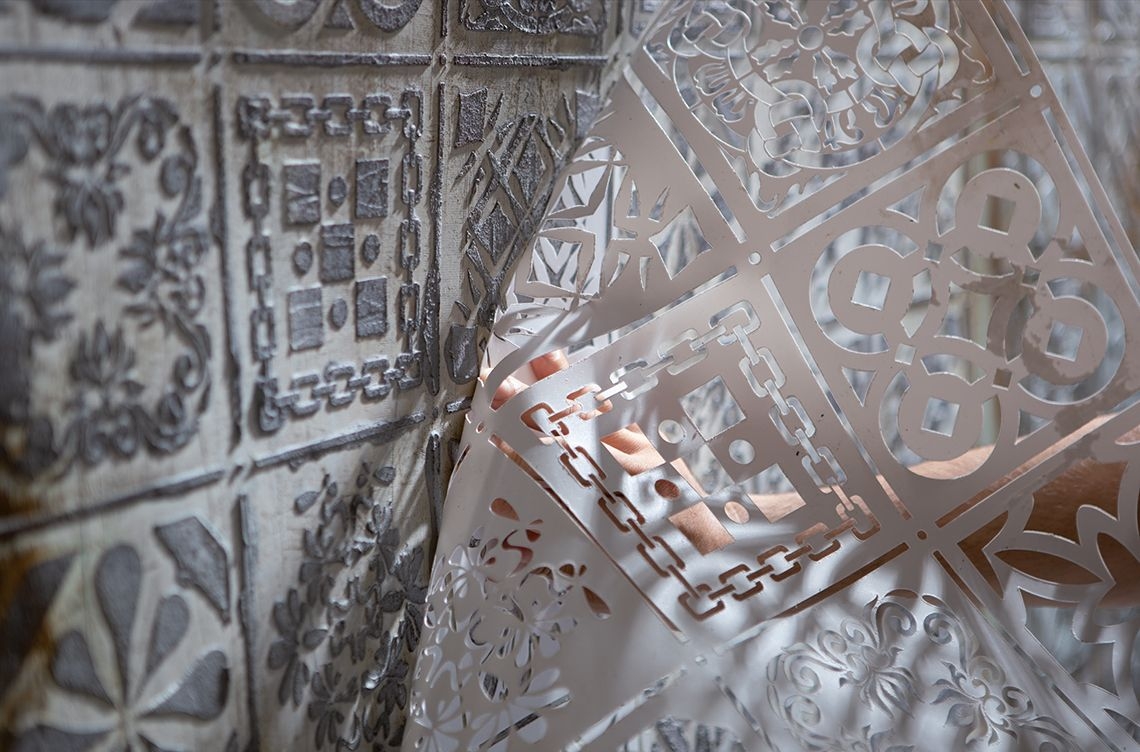
The aesthetics of relief is fully realized when the surface abandons its static character and begins to interact with the luminous atmosphere of the space. Stencilling is no longer viewed as a superimposed pattern, but rather as a device for generating a shifting chiaroscuro, capable of reacting to the flows of natural light or to the zenith beams of lighting design.
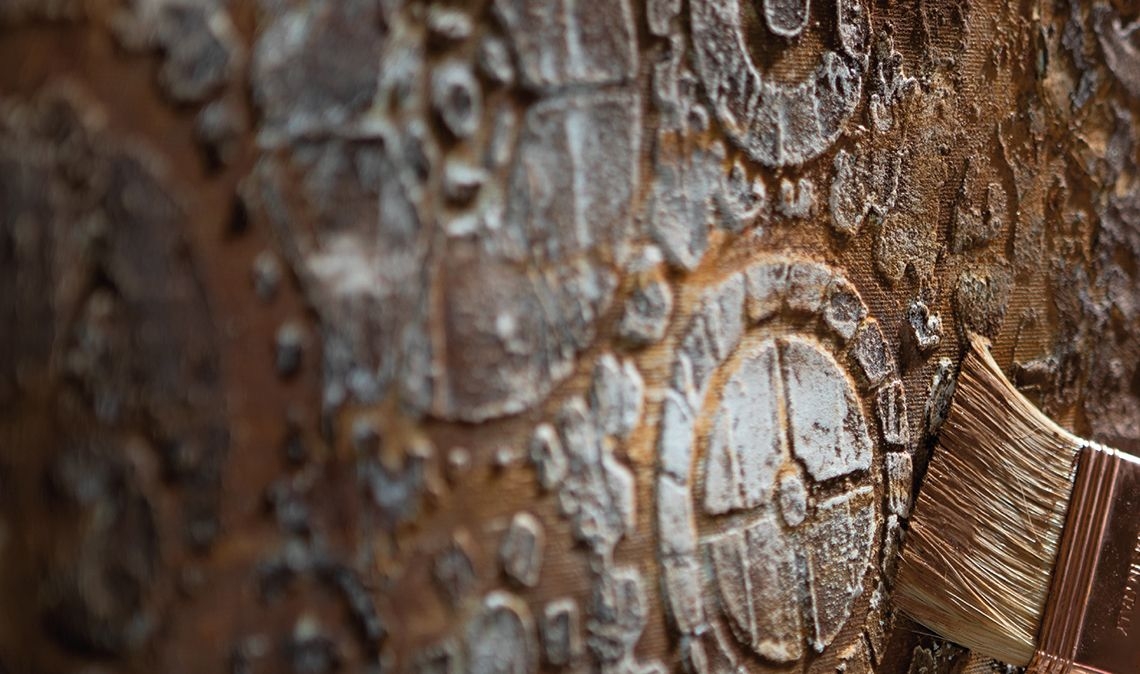
Visual balance is achieved through the poetics of imperfection and temporal layering.
By using a finish with a strong expressive personality, such as METEORE 10 CEMENTO Vintage Concrete Effect, the function of stencilling is no longer to outline a geometric shape, but to imprint a genuine textured memory onto the wall.
On such dense, deep, and deliberately vintage surface, the pattern traced with stencils emerges from the background through the sheer modulation of materials. The intrinsic porosity and the appearance of washed concrete capture the light, trapping it in the micro-shadows of the textures, while the ridges of the graphic motif provide a more defined interpretation.
The result is an optical effect that is intimately linked to time and space: walls are revealed with understated discretion depending on the observation point and time of day. When the grazing light glances off the reliefs, the vintage concrete effect is enriched with soft nuances and desaturated colour transitions, amplifying the visual depth of space and offering an authentic sensory experience capable of imparting a solid contemporary elegance to the setting, without ever feeling intrusive.
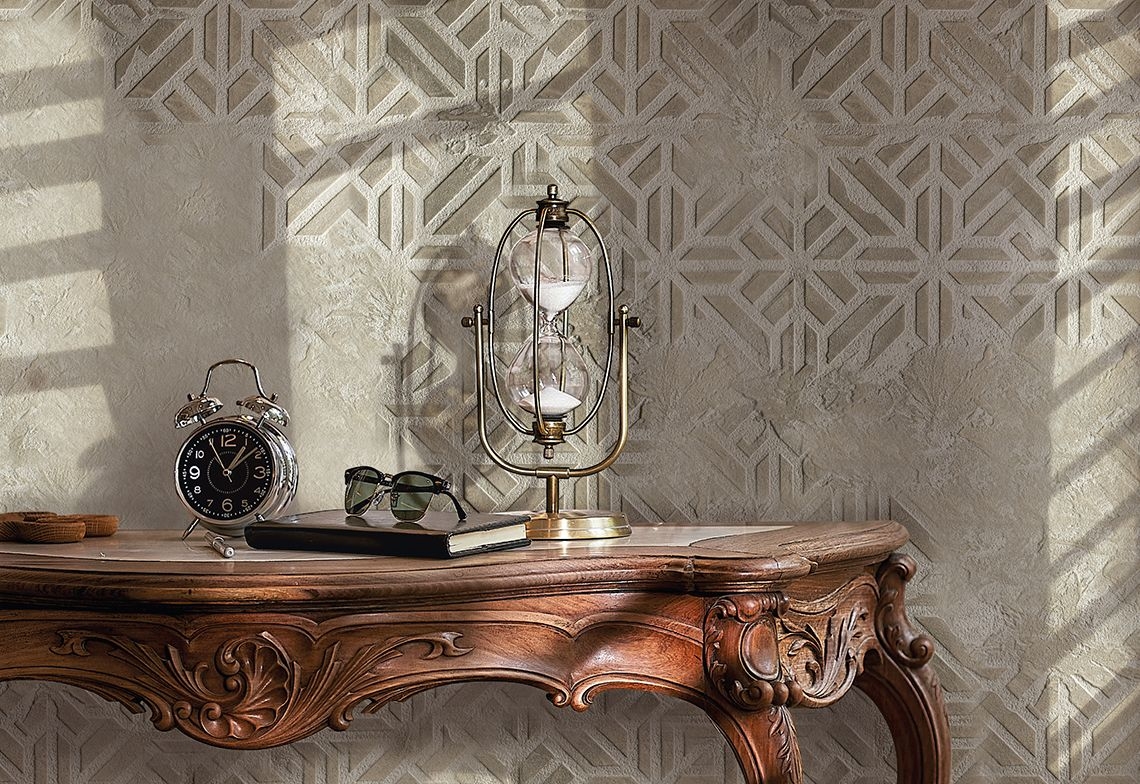
The choice of the decorative motif and its proportional scale are merely compositional decisions, closely tied to the volumetric interpretation of the space. With stencilling, designers can calibrate the rhythm of the wall, moving between the discretion of filigree-like micro-textures and the boldness of macro-modules, capable of defining the identity of a double-height space or a large circulation area.
In more intimate rooms, design becomes a detail of precision. It is a dense presence that replaces the idea of classic wainscoting with a contemporary, continuous, and structured solution.

On the other hand, when architecture expands into the large spaces of contract or hospitality projects, the pattern adapts to the new dimensions, transforming itself into a monumental graphic gesture that dominates the background walls and directs the perspective.
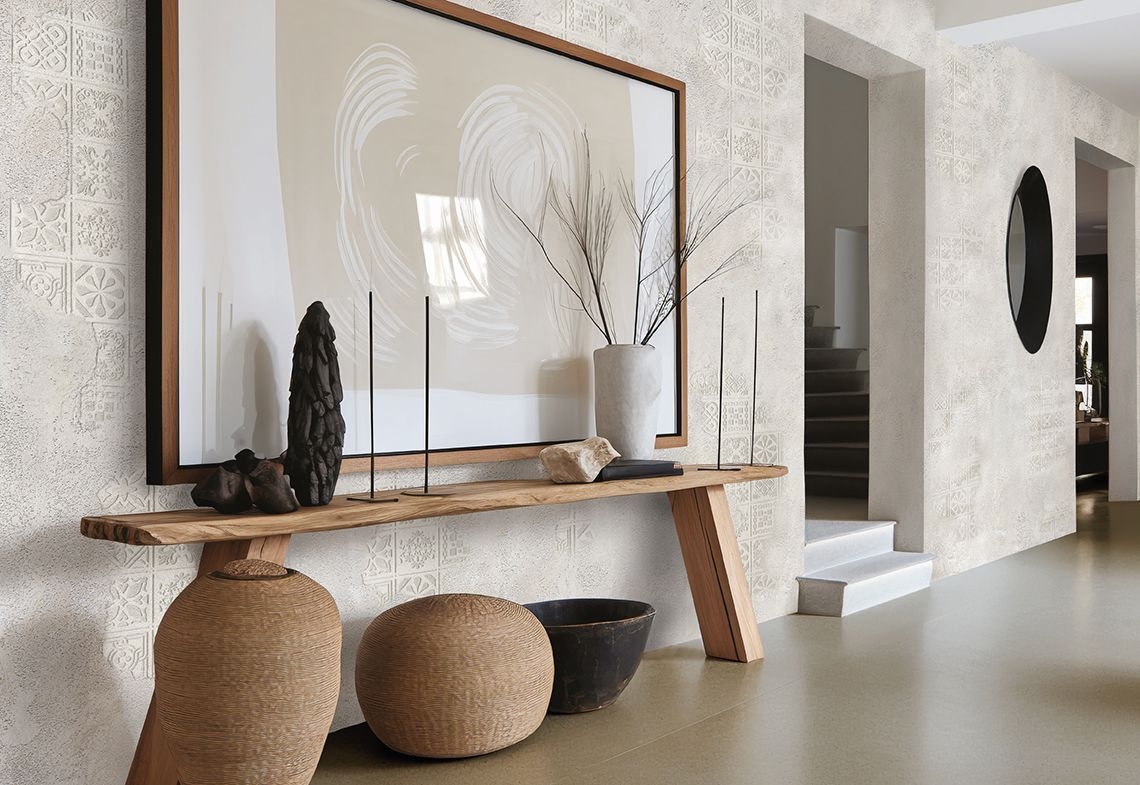
Specific application rules apply to projects involving monumental surfaces. To find out more about this aspect, read the article dedicated to the use of stencilling for large walls.
Harmonic composition: surfaces are the focal point of interior design projects
A vertical surface conceived in this way ceases to be a mere backdrop and becomes the aesthetic centre of gravity of the space. Its expressive power lies in the ability to establish harmonious relationships with the other noble materials chosen for the project: the warm, matt essence of a walnut floor, the precise brushing of metal details, the softness of fabrics, or the purity of exposed concrete.
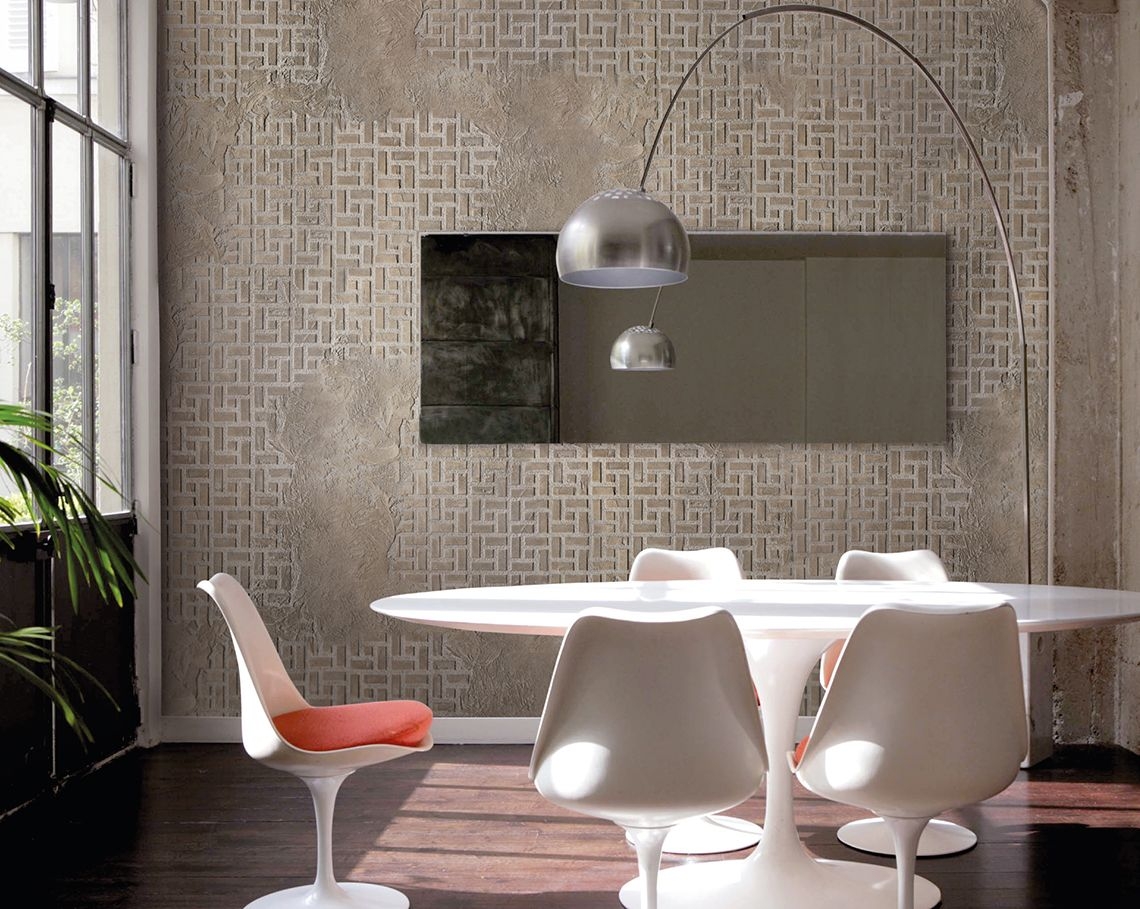
Thanks to the aesthetic flexibility of VALPAINT systems, stencilling can adjust to a wide range of stylistic approaches. The complexity of the relief texture never clashes with the geometric lines of fixed or movable furnishings, but rather enhances their proportions, acting as a visual connective tissue.
While textured three-dimensionality redefines the tactile experience of the wall, the overall chromatic balance remains the cornerstone of the project. To explore this topic further, go to the guide dedicated to the integration of wall stencilling into the living space.
The interaction between the formal precision of design and the expressive richness of the material grants total creative freedom, converting the wall into a permanent architectural element capable of giving prestige and a profound tailored value to the entire space.
When design merges with the substance of the wall covering, walls cease to be a mere enclosure and become a sculptural presence that globally defines the interior architecture.
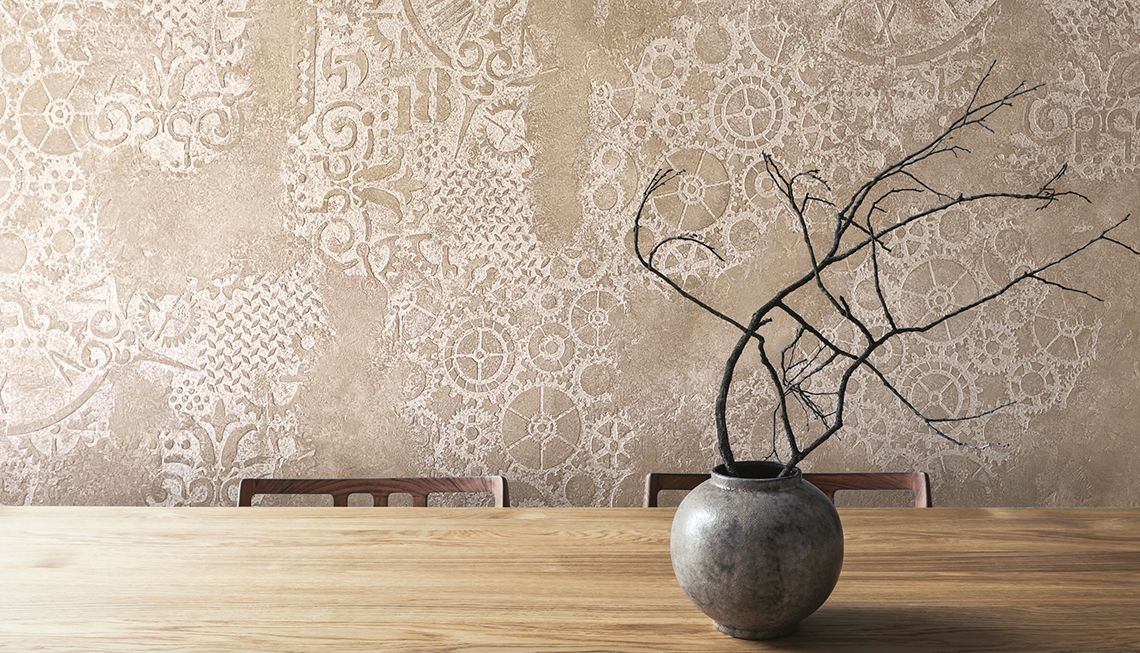
VALPAINT textured systems give designers the freedom to sculpt form directly onto the surface, mastering the play of light and shadow with geometric precision and a tailored touch. It is in this synthesis between precise lines and unpredictable materials that design finds its uniqueness, ensuring a perfect aesthetic result that stands the test of time.





 Bulgaro
 Cinese
 Coreano
 Croato
 Francese
 Greek
Greek Inglese
 Italiano
 Japanese
 Lituano
 Polacco
 Portoghese
 Russo
Russo Spagnolo
 Tedesco